Treatment · Sports
Mobile Sports Massage at Home in London
Targeted massage for people who train. Whether you are building up to a marathon, lifting heavy in the gym or playing five-a-side on a Tuesday night, a qualified sports massage therapist comes to you, works on the muscles you use most and helps you recover faster between sessions.
- Level 3 and Level 4 qualified sports massage therapists
- Pre-event, post-event and maintenance sessions
- From £80 for 60 minutes, at home or at your hotel
What it is
What is sports massage?
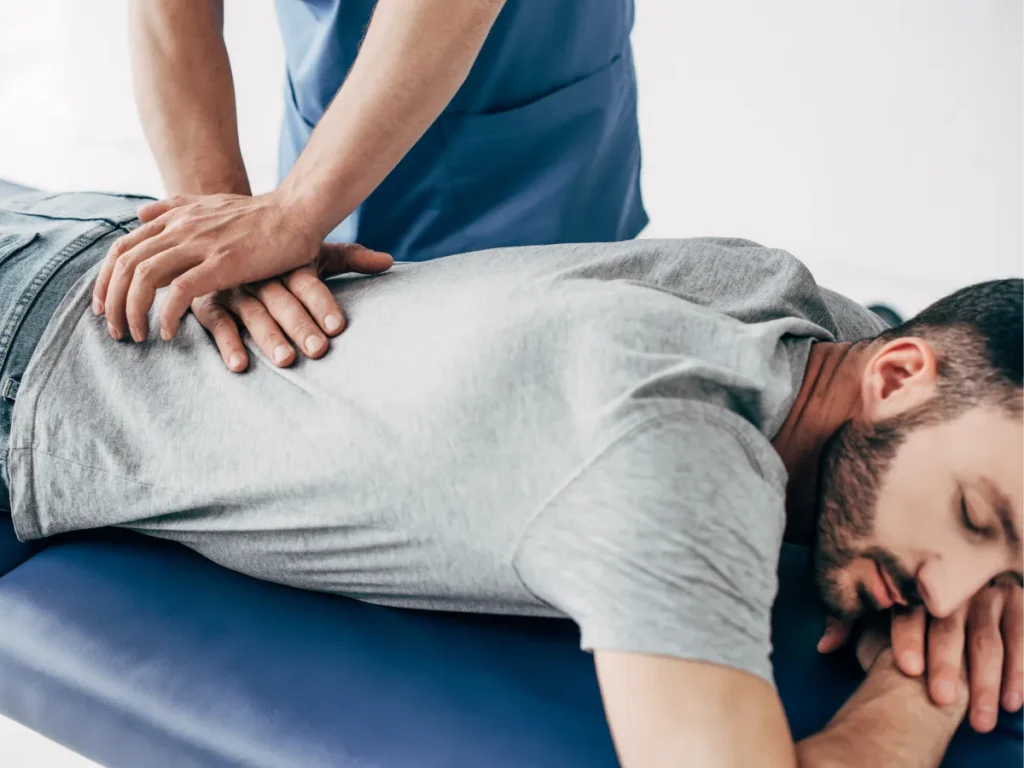
Sports massage is a form of soft tissue therapy designed around the demands that exercise places on the body. It combines familiar massage strokes with more specific techniques to assess and treat muscles, tendons and fascia, with the aim of keeping you moving well, recovering between workouts and reducing the tightness that builds up with regular training.
You do not need to be an elite athlete to benefit. Most of our sports massage clients in London are recreational runners, cyclists, gym-goers, climbers, tennis and padel players, and people who simply walk a lot and sit at a desk the rest of the time.
Sports massage therapists in the UK typically train to Level 3 (the core qualification for sports massage) or Level 4, which adds more advanced assessment and treatment techniques. Our sports massage therapists hold at least a Level 3 sports massage qualification, and many are Level 4 qualified.
Techniques we use
- Soft tissue release (STR): the therapist pins a point in the muscle while you move the joint, creating a precise, targeted stretch.
- Muscle energy technique (MET): you gently contract a muscle against the therapist’s resistance, then relax into a deeper stretch.
- Trigger point therapy: sustained pressure on tight, tender points that may refer pain elsewhere.
- Deep effleurage and petrissage: firm strokes and kneading to flush the muscles and ease general tightness.
- Assisted stretching: guided stretches, including PNF (proprioceptive neuromuscular facilitation) techniques, to improve range of movement.
Session types
Pre-event, post-event and maintenance sports massage
Pre-event massage
A short, brisk, energising massage in the days or hours before a race or match. It warms the muscles and helps you feel loose and ready without leaving you sore. We avoid deep work just before an event.
Post-event massage
Lighter, flushing strokes in the 24 to 72 hours after a race or hard session. The aim is to ease stiffness and help you feel more comfortable as you recover, not to work deeply on tired tissue.
Maintenance massage
Regular sessions during training blocks, usually every one to four weeks. This is where deeper work happens, picking up tight areas before they become a problem and keeping your body ready for the next session.
Recovery from DOMS
Delayed onset muscle soreness (DOMS) is the stiffness that peaks around one to two days after unaccustomed or intense exercise. Many clients find massage makes this period more comfortable.
Who it helps
Sports massage for London's runners, riders and lifters
London is one of the world’s great cities for sport. From the London Marathon each spring to parkrun in Hyde Park, Victoria Park and on Wimbledon Common, cycle loops in Regent’s Park and Richmond Park, and gyms on almost every high street, the city is full of people asking a lot of their bodies. These are the areas we treat most often:
- Runners: calves, Achilles area, hamstrings, glutes, the iliotibial (IT) band area and the soles of the feet (plantar fascia). Popular in the build-up to the London Marathon, Royal Parks Half and Hackney Half.
- Cyclists: quads, hip flexors, glutes, lower back and neck, which tighten from long rides in a forward position.
- Gym-goers and lifters: chest, shoulders, lats, upper back, hips and legs after heavy training days.
- Racket sports and climbing: forearms, shoulders and upper back, including tight grip muscles.
- Team sports: hamstrings, groin, calves and lower back from sprinting, turning and contact.
The session
What happens during a sports massage at home
Assessment
Your therapist asks about your sport, training load, upcoming events and any niggles or past injuries. They may watch you move, check your range of movement, or feel for areas of tightness before deciding where to focus.
Treatment
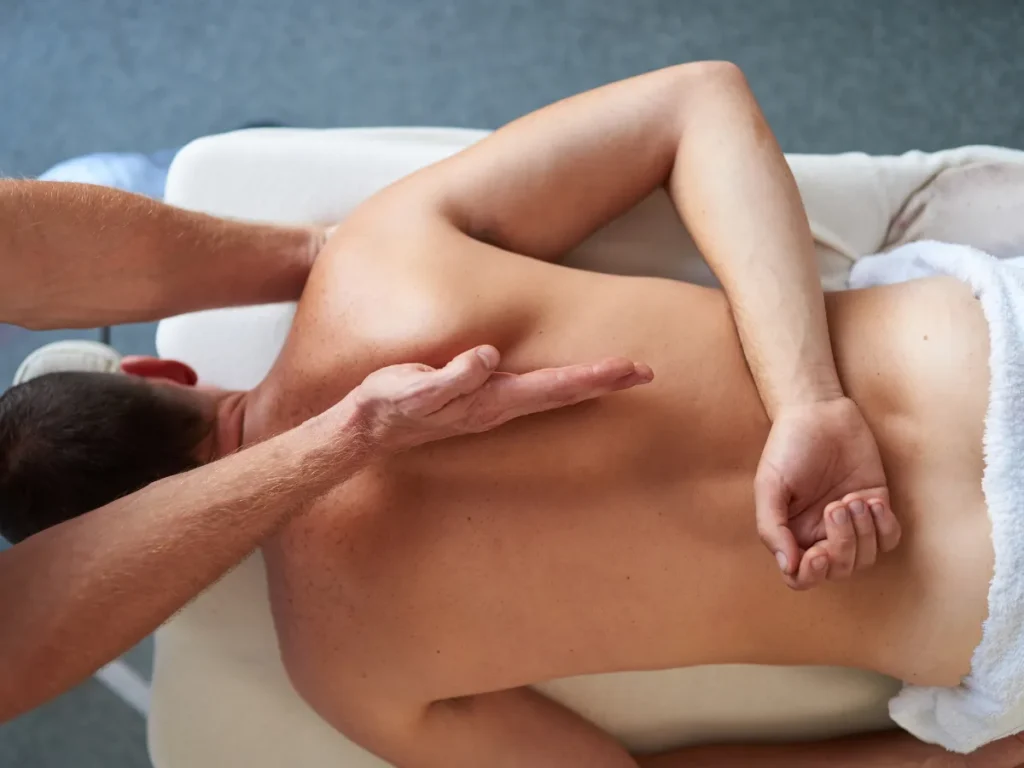
Sports massage is more focused and interactive than a relaxing massage. Your therapist may ask you to move a limb, push against their hand or breathe out as they apply a stretch. Comfortable clothing such as shorts and a vest top is fine for some techniques, though most clients undress to their underwear under a towel as for any massage.
Advice
At the end, your therapist will explain what they found and may suggest stretches, foam rolling or mobility work to do between sessions. If something needs medical assessment, they will tell you and recommend seeing a physiotherapist or your GP.
What sports massage is not
Sports massage supports your training and recovery, but it is not a diagnosis or a replacement for physiotherapy. For acute injuries, significant swelling, or pain that does not improve, see a physiotherapist registered with the Health and Care Professions Council (HCPC) or your GP.
Prices
Sports massage prices
| Session length | Best for | Price |
|---|---|---|
| 60 minutes | Focused work on one or two areas, such as legs and back, or a pre-event or post-event session | £80 |
| 90 minutes | Full-body maintenance massage with time for stretching and targeted work | £110 |
| 120 minutes | Heavy training blocks, multi-sport athletes and post-marathon recovery days | £140 |
Training for a big event? Ask about booking a series of sessions across your training block, with a light pre-event massage in race week and a post-event session a day or two after.
Timing
When to book a sports massage around training
- Race week: a light pre-event massage two to four days before, not a deep session the day before.
- After a race or hard session: wait at least 24 hours for a light post-event massage, and longer before deep work.
- During training: a maintenance session every two to four weeks, timed after a rest day or easy day.
- Before a heavy session: avoid deep tissue work in the 24 hours before, as you may feel a little tender.
A mobile massage is especially useful after a long run or race, when the last thing your legs want is a journey across London to a clinic.
Where we visit
Mobile sports massage across London
We visit homes, hotels and offices throughout London, including Mayfair, Marylebone, Kensington, Chelsea, Fulham, Battersea, Clapham, Wandsworth, Putney, Islington, Hackney, Shoreditch, Canary Wharf and Greenwich. Visiting London for a race? We can come to your hotel the day after the event.
Self-care
Looking after your muscles between sessions
A sports massage every few weeks is most effective alongside good everyday recovery habits:
- Sleep: most adults need seven to nine hours, and much of your recovery from training happens while you sleep.
- Fuel and hydration: eat enough protein and carbohydrate after hard sessions, and keep drinking water through the day.
- Foam rolling: a few minutes on the calves, quads, glutes and upper back can help you feel looser between massages. Roll slowly and avoid rolling directly on joints or the lower back.
- Mobility work: short daily mobility routines for the hips, ankles and upper back help you hold on to the range of movement gained during your massage.
- Sensible progression: increase training load gradually. Sudden jumps in mileage or weight are a common cause of overuse niggles.
- Listen to early warning signs: if an area feels sore in the same place for more than a week or two, get it assessed rather than training through it.
FAQs
Sports massage FAQs
What is the difference between sports massage and deep tissue massage?
Both can use firm pressure, but sports massage is built around your training and movement, and uses more active techniques such as soft tissue release, muscle energy technique and assisted stretching. Deep tissue massage focuses on slow, sustained pressure for chronic tension. Read more about deep tissue massage at home.
Do I need to be an athlete to book a sports massage?
Not at all. If you exercise regularly, walk a lot, or feel tight from sitting at a desk, sports massage can help. Our therapists adjust the session to your level.
How soon after a marathon can I have a massage?
A light, flushing post-event massage is usually best from around 24 to 72 hours after the race. Save deeper work for a week or so later, once the initial soreness has settled.
Is sports massage painful?
Some techniques feel intense, especially on tight areas such as the calves and IT band area, but you should always be able to breathe through it. Tell your therapist if anything feels sharp.
Can sports massage treat an injury?
Sports massage can help with general muscle tightness and recovery, but injuries should be assessed by a physiotherapist or doctor first. Our therapists will not treat an acute injury and will advise you to get it checked.
What should I wear for a sports massage?
Most clients undress to their underwear and stay covered with a towel. For some stretches, loose shorts are useful. Your therapist will let you know.
Book a mobile sports massage
Tell us your sport, upcoming events and the areas that feel tight. We will match you with a qualified sports massage therapist near you.