Treatment · Deep tissue
Deep Tissue Massage at Home in London
Firm, focused pressure for the knots and tension that a lighter massage cannot reach. A qualified therapist comes to your home, hotel or office anywhere in London, works on the deeper layers of muscle and fascia, and leaves you looser, lighter and able to move more freely.
- 60, 90 or 120 minute sessions
- From £80, travel included in our core area
- Same-day appointments, 24h

What it is
What is deep tissue massage?
Deep tissue massage is a therapeutic massage technique that uses slow strokes and sustained, firm pressure to reach the deeper layers of muscle and the connective tissue around them, known as fascia. Where a Swedish massage glides over the surface of the muscles to relax them, deep tissue massage works more slowly and more specifically, sinking into tight areas and holding pressure until the tissue begins to soften.
The aim is not to cause pain. A good deep tissue massage feels intense in places, a “good hurt” rather than a sharp one, and the therapist adjusts the pressure constantly as your muscles respond. If anything feels too strong, you only need to say so.
Our therapists use their palms, thumbs, knuckles, forearms and elbows to apply pressure precisely. Typical techniques include:
- Stripping: a slow, gliding pressure along the length of a muscle, often using the forearm or thumbs.
- Cross-fibre friction: short movements across the direction of the muscle fibres, used on small, stubborn areas.
- Trigger point therapy: sustained pressure on a tight, tender spot (often called a “knot”) that may refer pain elsewhere, such as from the shoulder up into the head.
- Myofascial release: slow, sustained stretching of the fascia to improve how muscles slide over each other.
- Passive stretching: gently moving a limb to lengthen tight muscles once they have been warmed up.
Who it helps
Who is deep tissue massage for?
Deep tissue massage is popular with Londoners who carry tension in the same places day after day. It suits you if you:
- Spend long hours at a desk or laptop and feel tightness across the shoulders and upper back
- Get a stiff neck or tension headaches after long working days or screen time
- Have a tight lower back from sitting, driving, lifting children or standing at work
- Train regularly at the gym, run, cycle or play sport and feel persistently tight muscles
- Feel that a relaxing massage is too light to make a real difference
- Have chronic muscle tension that comes back despite stretching
It is less suitable if you bruise easily, are on blood-thinning medication, have osteoporosis or have had a recent injury in the area to be treated. In those cases, a Swedish massage with medium pressure is often the better choice.
Focus areas
Common areas we work on
Most clients ask us to focus on one or two areas while still receiving a full-body treatment. These are the most common:
Neck and shoulders
The upper trapezius and levator scapulae muscles tighten when we hunch over phones and laptops, often called “tech neck”. Releasing them can ease stiffness and tension headaches.
Upper back
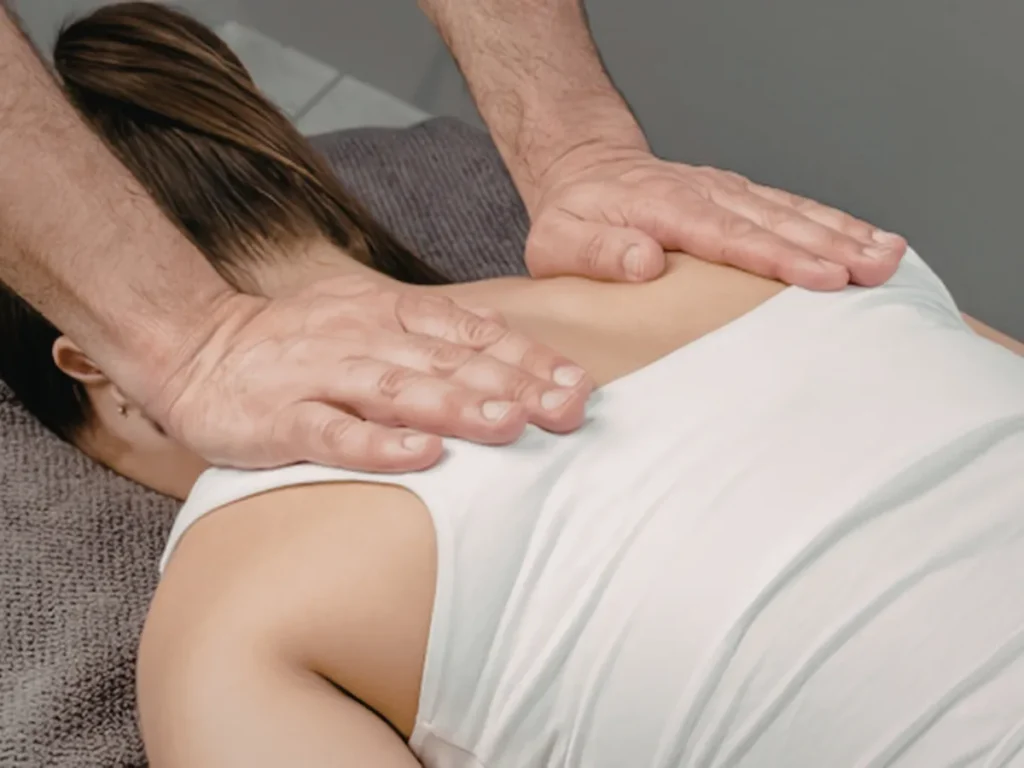
The rhomboids between the shoulder blades often feel knotted and sore, especially for people who sit with rounded shoulders. Slow work here can make posture feel easier.
Lower back
The erector spinae and quadratus lumborum muscles support the spine and often tighten after long periods of sitting, lifting or standing. Deep work can ease that familiar ache.
Hips and glutes
The glutes and piriformis can become tight in runners, cyclists and anyone who sits a lot, sometimes contributing to discomfort that runs down the back of the leg.
Legs
Hamstrings, quads and calves hold a lot of tension in active people. Deep work here pairs well with stretching for better range of movement.
Forearms and hands
Typing, using a mouse and lifting weights can tighten the forearm muscles. Short, focused work here is often a pleasant surprise for desk workers.
The session
What happens during a deep tissue massage at home
Consultation
Your therapist arrives, sets up the table and asks about your health, your work and activity levels, any injuries or medical conditions, and where you feel tension. They may ask you to show them movements that feel restricted, such as turning your head or bending forwards.
Warming up the tissue
Every deep tissue massage starts with lighter, broad strokes to warm the muscles and increase blood flow. Going deep on cold muscles is uncomfortable and less effective, so this stage matters.
Targeted deep work
Once the tissue is warm, the therapist works progressively deeper into the areas you have identified, checking in with you about pressure. Expect slower strokes and longer holds than in a relaxing massage. Breathing slowly and deeply helps the muscles release.
Finishing and aftercare
The session finishes with lighter strokes to settle the nervous system. Your therapist will explain what they found and give you simple advice on stretching, posture or follow-up sessions if helpful.
Aftercare
After your deep tissue massage
It is normal to feel a little tender in the areas that were worked on, similar to the feeling after a good workout. This usually fades within 24 to 48 hours. To get the most from your treatment:
- Drink water and have something light to eat
- Take a warm shower or bath later in the day to keep the muscles relaxed
- Avoid intense training on the worked areas for the rest of the day
- Move gently, as light walking and stretching help more than sitting still
- Notice how your body feels over the next few days, so you can tell your therapist next time
If you feel sharp pain, numbness or tenderness that gets worse rather than better after two days, contact your GP or a physiotherapist.
Choosing the right session
How long should a deep tissue massage be?
| Session length | Best for | Price |
|---|---|---|
| 60 minutes | One or two focus areas, such as neck and shoulders, with a short full-body warm-up | £80 |
| 90 minutes | A full-body massage with real time for deep work on problem areas, our most popular option | £110 |
| 120 minutes | Full-body deep work for very active clients or anyone with widespread tension | £140 |
For long-standing tension, regular sessions every two to four weeks usually give better results than a single long treatment. Many of our London clients book a recurring slot on the same evening each month.
Comparison
Deep tissue massage vs sports massage vs Swedish massage
These three treatments overlap, and our therapists blend techniques where it helps. The main differences are the goal and the pace:
| Deep tissue | Sports | Swedish | |
|---|---|---|---|
| Main goal | Release chronic tension and knots | Support training, performance and recovery | Relaxation and stress relief |
| Pressure | Firm and sustained | Medium to firm, varied | Light to medium |
| Pace | Slow | Varied, often brisk | Flowing and rhythmic |
| Typical client | Desk workers, chronic tension | Runners, gym-goers, athletes | Anyone who wants to unwind |
If your tension is linked to a specific sport or training plan, sports massage at home may suit you better. If you mainly want to switch off, choose Swedish massage.
Where we visit
Deep tissue massage across London
Our therapists offer deep tissue massage at home throughout Central London and most of Greater London. Popular areas include Mayfair, Marylebone, Kensington, Chelsea, Notting Hill, Fulham, Islington, Hampstead, Shoreditch, Canary Wharf, Battersea and Clapham. We also visit hotels and offices, which is popular with business travellers and people working long hours in the City.
Between sessions
Keeping tension away between massages
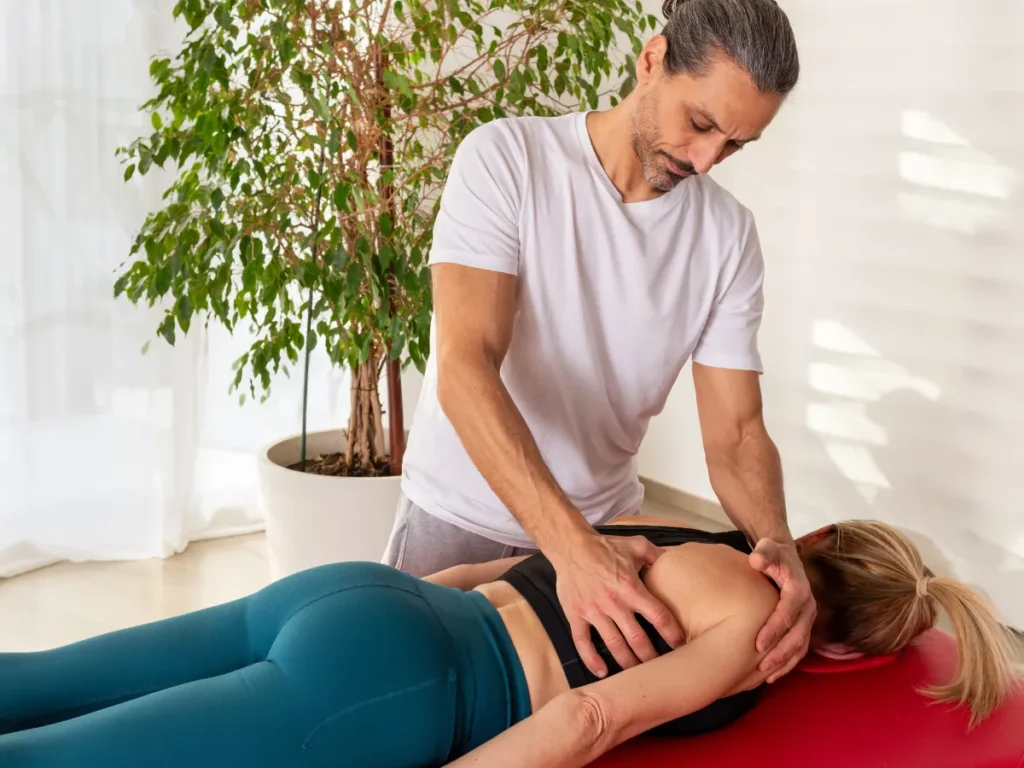
Massage works best alongside small daily habits. These simple changes, especially useful for people working from home or in an office, help the benefits of your deep tissue massage last longer:
- Set your screen at eye level: looking down at a laptop for hours is one of the main causes of neck and upper back tension. A laptop stand and separate keyboard make a big difference.
- Move every 30 to 45 minutes: stand up, roll your shoulders and walk for a minute or two. Short, frequent breaks help more than one long stretch at the end of the day.
- Stretch your chest and hip flexors: a doorway chest stretch and a kneeling hip flexor stretch counter the rounded posture of sitting.
- Breathe low and slow: shallow breathing under stress keeps the neck and shoulder muscles working. A few slow breaths into the belly helps them switch off.
- Use heat: a warm shower or heat pack on tight shoulders in the evening helps keep the muscles relaxed.
Your therapist can suggest specific stretches based on what they find during your treatment.
FAQs
Deep tissue massage FAQs
Does deep tissue massage hurt?
It can feel intense, especially on very tight areas, but it should not be painful. A good therapist works within your comfort level and checks in regularly. Tell them straight away if the pressure feels sharp or makes you tense up.
How often should I have a deep tissue massage?
For ongoing tension, every two to four weeks works well for most people. If you are dealing with a short-term flare-up, a few sessions closer together followed by monthly maintenance is common.
Can I have a deep tissue massage if I have a back injury?
It depends on the injury. For recent injuries, disc problems or pain that spreads down the leg, speak to your GP or a physiotherapist first. Our therapists will not work deeply on an area that needs medical assessment.
Should I feel sore the next day?
Mild soreness for a day or two is normal after deep work, particularly if it is your first session. It should feel like post-exercise stiffness and ease steadily.
Is deep tissue massage good for stress?
It can be, but if stress relief is your main goal, a Swedish massage is usually more relaxing. Many clients ask for a mix: deep work on the shoulders and back, with lighter relaxing strokes elsewhere.
Can I book deep tissue massage for two people?
Yes. Two therapists can come together for a couples session, and each person can choose their own treatment and pressure.
Book a deep tissue massage at home
Tell us your postcode, preferred time and the areas you want us to focus on. We will match you with an experienced deep tissue therapist near you.